Stopping distance: spazio di reazione, di frenatura e di arresto
Dozens of Patente B statements test three Italian terms: spazio di reazione, spazio di frenatura and spazio totale di arresto. They are easy to mix up. We simulated a car at 50 km/h in SUMO, an open traffic simulator, to show them on a real road model.
Try 3 questionsThe three distances
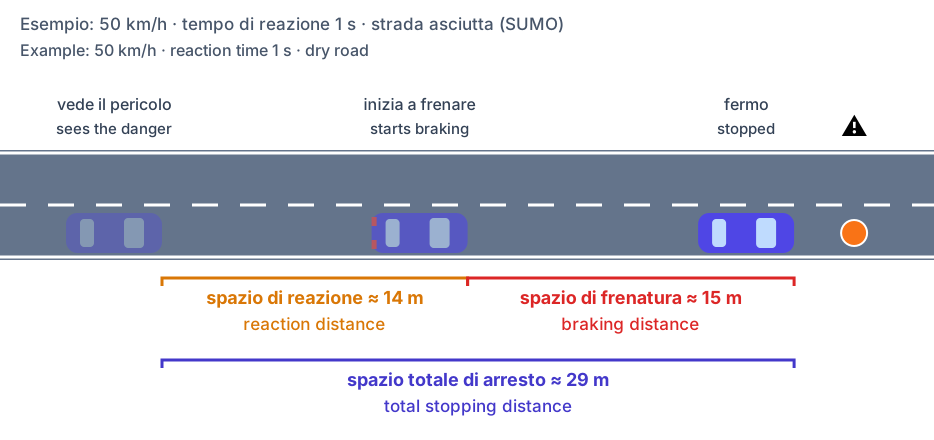
Spazio di reazione (reaction distance): the distance travelled from the moment you see the danger to the moment you press the brake. The car is still going at full speed.
Spazio di frenatura (braking distance): from the start of braking until the car stops.
Spazio totale di arresto (total stopping distance) = reaction distance + braking distance.
In our simulation (50 km/h, 1 second of reaction, dry road): about 14 m + 15 m = 29 m.
What makes them longer
Speed: the reaction distance grows with the speed; the braking distance grows with the square of the speed, so doubling the speed makes the braking distance about four times longer.
Tiredness, alcohol, drugs and distraction (for example the phone) increase the reaction time, so the reaction distance.
Wet, icy or dirty road, worn tyres and inefficient brakes increase the braking distance.
Questions
Is the total stopping distance only the braking distance?
No. It is the reaction distance plus the braking distance. A statement that leaves out one of the two is FALSO.
Does the reaction distance depend on the road surface?
No: it depends on the speed and on the driver's reaction time. The road surface changes the braking distance.
Independent learning tool, not affiliated with the Italian Ministry of Transport. Portale dell'Automobilista