Patente B road signs in English: 5 figures we saw again
A familiar picture can bring a completely different question. We compared a newly supplied 30-question Patente B paper with our earlier ten-paper sample. Five of its twelve figure-based questions used a picture already seen in that sample. Here are those five, the updated counts, and the rule to recognise when the Italian wording changes.
DriveLingua ·
- new paper's figure questions using an earlier picture
- 5 / 12
- distinct papers now compared
- 11
- question appearances in the combined sample
- 330
What repeated in the paper added on 20 October?
The three supplied images are pages of one paper, not three separate exams. We matched all thirty statements and checked the pictures against the official bank. The table counts appearances of the same figure, even when the statement beside it is different. The new paper contributes one appearance to each row.
These are observations from eleven supplied papers, not national frequencies or a forecast. Recognising a picture helps you find the topic; understanding the complete sentence determines VERO or FALSO.
| Figure | Earlier 10 papers | All 11 papers |
|---|---|---|
| Give way to oncoming traffic | 4 | 5 |
| Vehicle traffic lights | 3 | 4 |
| Dangerous bend to the left | 1 | 2 |
| Flooding-risk supplementary panel | 1 | 2 |
| Junction with vehicles R, A and C | 1 | 2 |
1. Opposing arrows: who must give way?
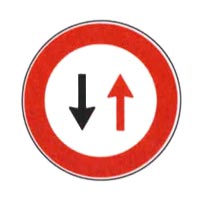
This red circular sign is now present five times in our combined sample. It tells you to give way to oncoming traffic where the passage is too narrow for both directions together. The latest question's claim that it requires giving way in alternating one-way traffic is VERO.
Compare it with the blue square that gives priority over oncoming traffic. The arrows alone are not enough: name the shape and colours first. If a question also mentions traffic lights, read their operating condition rather than treating every situation as identical.
Keep these words: dare precedenza = give way; sensi unici alternati = alternating one-way traffic; senso opposto = opposite direction.
2. Traffic lights: steady yellow is not flashing yellow
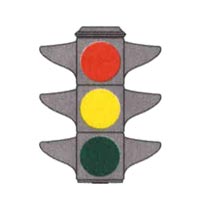
This vehicle traffic-light figure has risen from three appearances to four. The new statement says the steady yellow light goes out before red comes on: VERO. The earlier papers asked different things about this same picture, including red lights and a signal that is switched off.
The useful skill is reading the light's state, not remembering one answer for the picture. A steady light, a flashing light and a switched-off signal are different conditions. Underline gialla fissa, lampeggiante, accesa and spenta when revising.
3. Left-bend warning: direction and distance both matter
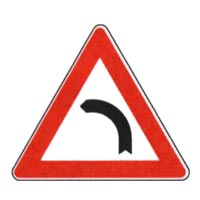
The left-bend triangle appeared once in the earlier sample and once in the new paper. The latest question describes advance warning of a dangerous bend, normally 150 metres ahead: VERO. 'Normally' matters; it is not a promise that every placement has exactly that distance.
A warning triangle describes a hazard ahead; it is not the blue mandatory-direction sign telling you to turn. Compare the bend's direction carefully and learn: curva pericolosa = dangerous bend; a sinistra = to the left; preannuncia = warns in advance; di norma = normally.
4. Wavy lines: flooding risk, not a swimming pool
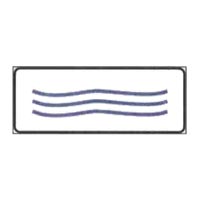
This supplementary panel has appeared twice across the eleven papers. In the new paper, the statement interprets it as a nearby swimming pool: FALSO. The panel warns that the road can flood in heavy rain or strong sea conditions.
The picture's meaning is a road condition. Do not turn a visual association ('waves look like water') into the wrong kind of sign. Learn: pannello integrativo = supplementary panel; allagamento = flooding; forte pioggia = heavy rain; piscina = swimming pool.
5. The R–A–C junction: read the paths, not just the letters
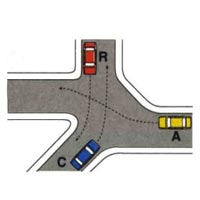
The same junction drawing appeared once before and appears again in the new paper. For the ordinary priority situation shown, the order is R, then A, then C. The new claim that C and R go first together is FALSO: C goes after both R and A.
Trace each dashed route and identify which vehicle must wait for another. Then check what the sentence actually claims: first, second, last or simultaneously. Do not transfer this order to another junction, or to a question that explicitly changes the situation, such as an emergency vehicle operating its warning devices.
Keep these words: per primo = first; per ultimo = last; dopo = after; contemporaneamente = at the same time.
Another trap in the new paper: 30 does not mean 30 tonnes
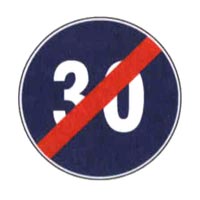
This is a separate example from the new paper, not one of the five recurring figures above. The crossed blue 30 sign ends a minimum-speed requirement. The new statement calls it the end of a ban on vehicles above 30 tonnes: FALSO. Read the shape, colour, symbol and unit together before attaching a rule to the number.
Remember: minimo = minimum; massimo = maximum; fine = end; massa = mass. This example shows why memorising the picture without understanding the words can still lead to a mistake.
Make these signs easier to recall in your next practice session
Cover the explanation and name the sign in your own language. Say its Italian keyword, then explain what the driver must do. Compare one similar-looking sign and name the difference. Finally, answer a fresh Italian statement about it before looking at the explanation.
Use the 504-topic course for the underlying rules, then practise full papers and revisit mistakes. English and Urdu explanations make the Italian easier to understand; they do not turn five familiar pictures into five guaranteed marks. The rest of the syllabus still matters.
How this update was checked
Published 20 October 2026. We added one complete paper, supplied as three images, to the frozen ten-paper baseline. All thirty questions were matched to the 7,020-statement bank; ambiguous same-wording signs were checked visually. We counted the figure separately from the statement. The combined sample contains eleven distinct papers and 330 question appearances. The earlier article keeps its original ten-paper counts, so both snapshots remain verifiable.
This is a small reader-supplied sample. The original images, candidate answers and any personal information are not published. Only anonymous bank question IDs and reproducible counts are available below.
Questions
Which sign repeated most in the combined sample?
The red circular give-way-to-oncoming-traffic sign has five question appearances across our eleven-paper sample. That does not establish how often it appears nationally or in your next exam.
Were the three new images three separate exams?
No. They show questions 1–10, 11–20 and 21–30 of one complete paper. We added one paper, not three, to avoid inflating the counts.
Can I learn these Patente B signs in English or Urdu?
Yes. Use the language switcher for English, Urdu or Roman Urdu explanations. Learn the meaning in your language, then practise the original Italian statements and their vocabulary.
Independent learning tool, not affiliated with the Italian Ministry of Transport. Portale dell'Automobilista